The North Historic and The Simien Mountains
The Semien Mountains National park
The Semien Mountains National Park, a UNESCO World Heritage Site since 1979, stands as Ethiopia’s most renowned trekking and walking destination, celebrated for its dramatic landscapes of jagged peaks, deep valleys, and sheer cliffs plunging 1,500 meters. Spanning 412 square kilometers, the park is a sanctuary for rare and endemic wildlife, including the Walia ibex, gelada baboon, and the elusive Ethiopian wolf, alongside a remarkable array of plant species such as the towering giant lobelia. Ras Dejen, Ethiopia’s highest peak at 4,533 meters, crowns the rugged terrain, while the park’s diverse habitats offer exceptional opportunities for birding, with sightings of the iconic lammergeyer vulture. Whether on foot or mule back, the Simien Mountains provide a unique blend of natural beauty, adventure, and biodiversity, making it a premier ecological treasure in northern Ethiopia.

Axum
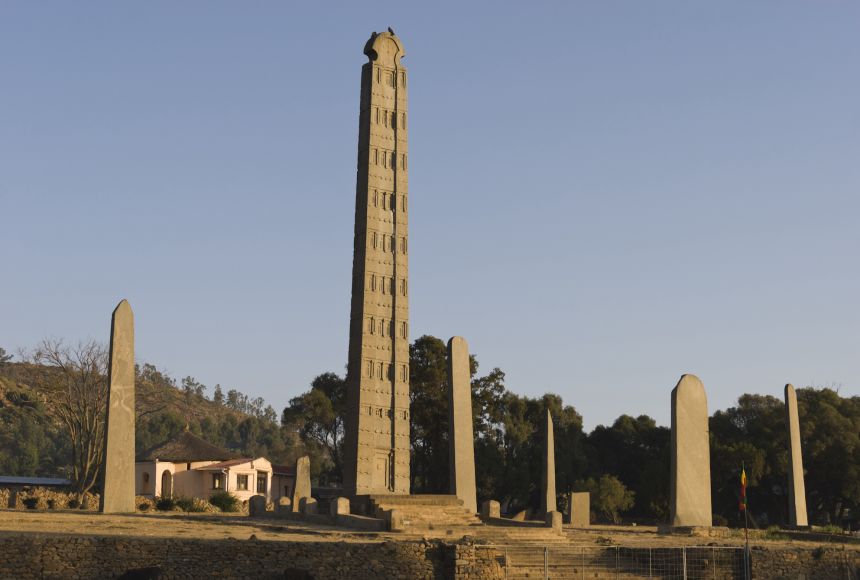
Axum, a UNESCO World Heritage site since 1980, stands as one of Ethiopia’s most sacred and historically significant cities, often compared to Jerusalem, Rome, and Constantinople for its profound legacy. Once the capital of the powerful Aksumite Kingdom, Axum was a dominant trade hub in the Horn of Africa, with influence stretching from Sudan to Yemen long before the rise of Islam. The city is renowned for its ancient obelisks, royal tombs, ruined palaces, and the monumental stelae field, which houses some of the largest megaliths ever erected. Deeply tied to Ethiopian Christianity, Axum is traditionally believed to be the resting place of the Ark of the Covenant in the Chapel of the Tablet, brought to Ethiopia by Emperor Menelik I, son of King Solomon and the Queen of Sheba. The 4th-century Cathedral of Maryam Tsion, Ethiopia’s oldest church, the archaeological museum, and numerous relics scattered throughout the city continue to preserve and reflect Axum’s rich, unparalleled heritage.
Lalibela
Lalibela, often called the “Eighth Wonder of the World,” is a remarkable 12th-century site in Ethiopia, famous for its eleven rock-hewn churches and two chapels carved directly into the earth by order of King Lalibela. These extraordinary monolithic structures, some sunk as deep as 15 meters, showcase an unparalleled architectural achievement that blends devotion, artistry, and engineering. Among them, Bete Medhane Alem stands as the world’s largest rock-hewn church, while the cross-shaped Bete Giyorgis captivates visitors with its legendary connection to Saint George. Uniquely, Lalibela remains a living religious center, where centuries-old worship practices continue undisturbed, offering a rare fusion of ancient heritage and enduring faith.

Gondar
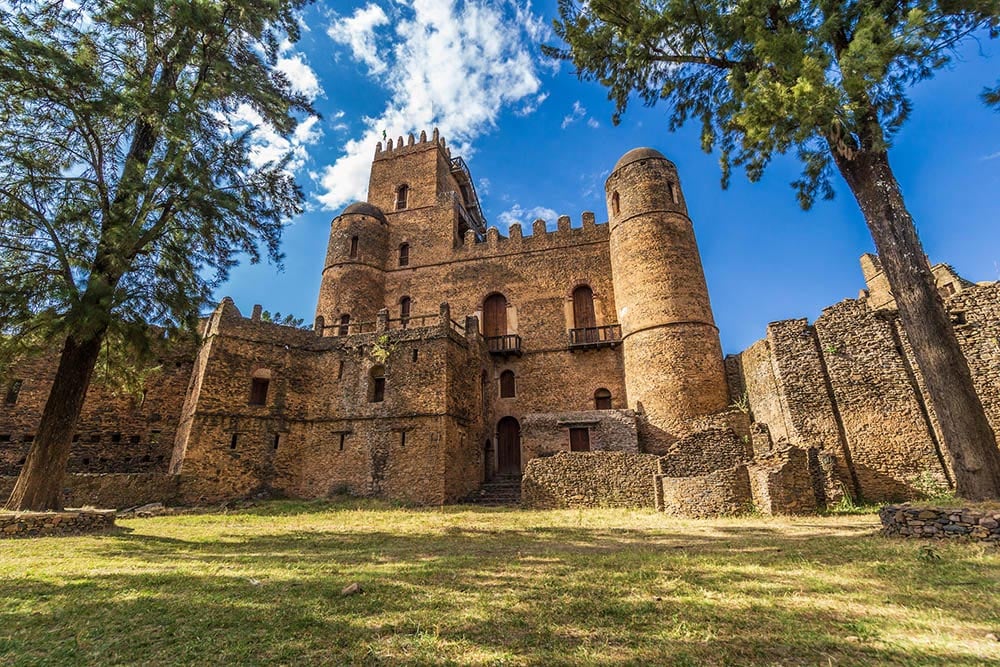
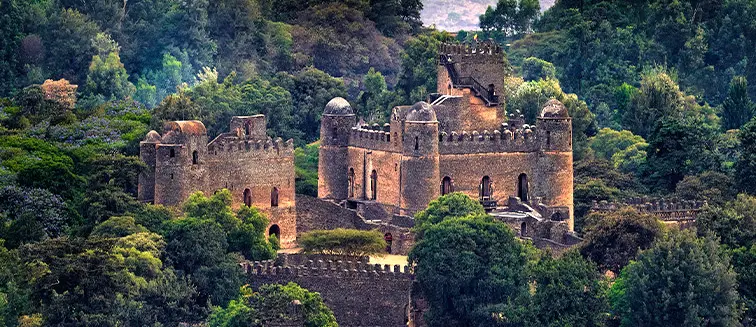
Gondar, often referred to as the Camelot of Africa, is a historic city in northern Ethiopia renowned for its unique blend of medieval and modern character. Serving as the country’s capital from 1636 to the mid-19th century, Gondar is best known for the magnificent Fasil Ghebbi, a stone-walled royal enclosure featuring a collection of fairytale-like castles, the most notable being the three-story palace of Emperor Fasil. The city’s rich heritage is further showcased by the beautifully adorned Debre Berhan Selassie Church, famed for its ceiling of cherubic faces, and Fasil’s Pool, the vibrant heart of the annual Timkat celebration. Other significant sites include the serene Kuskuam Palace, the historic Beta Israel village of Woleka, and the ancient monastic treasures at Gorgora on the shores of Lake Tana, all contributing to Gondar’s reputation as a living museum of Ethiopian culture and history.
The Blue Nile falls
The Blue Nile Falls, locally known as Tis Isat (Water that Smokes), is one of Ethiopia’s most breathtaking natural wonders. Described by the 18th-century Scottish explorer James Bruce as an unforgettable spectacle, the falls are especially impressive during the rainy season when they thunder over a 45-meter-high cliff, creating a powerful curtain of mist and spray. Accessible via a scenic 1.5 km footpath from the village of Tis Abay, visitors can enjoy stunning viewpoints and cross the historic 17th-century Alata Bridge. The area is also a haven for bird enthusiasts, offering sightings of rare species like the blue-breasted bee-eater and the white-cheeked turaco amidst the lush riverine forests. The journey to the falls, with its picturesque landscapes and vibrant birdlife, adds to the remarkable experience.

Debre libanos monastery
Debre Libanos Monastery, located about 110 kilometers north of Addis Ababa, is one of Ethiopia’s most significant religious and historical sites. Founded in the 13th century by Saint Tekle Haymanot, a revered figure in the Ethiopian Orthodox Church, the monastery serves as a vital center of spiritual life, pilgrimage, and religious scholarship. Set against a backdrop of dramatic cliffs and the stunning Jemma River Gorge, the monastery features beautiful stained-glass windows, impressive religious art, and a peaceful atmosphere that invites reflection. Debre Libanos also bears the memory of a tragic massacre carried out by Italian forces in 1937, marking it as a site of both reverence and national remembrance. Nearby, the famed Portuguese Bridge offers breathtaking views of waterfalls and the surrounding landscape, adding to the monastery’s appeal as a destination where history, faith, and natural beauty converge.

Lake Tana
Lake Tana, Ethiopia’s largest lake, is a breathtaking inland sea covering 3,156 km², surrounded by lush tropical vegetation and rich with historical and cultural significance. Best accessed from the vibrant port city of Bahir Dar, Lake Tana is renowned as the source of the Blue Nile and has been celebrated since ancient times by Egyptians and Greeks alike. Designated as a UNESCO Biosphere Reserve in 2015, the lake is dotted with medieval island monasteries, including Ura Kidane Mihret and the ancient Tana Chirkos, some dating back centuries and possibly millennia. The area offers a rich blend of history, spirituality, and biodiversity, from hippos and endemic fish to colorful birdlife. Bahir Dar itself enchants visitors with its lively markets, traditional music venues, and historic landmarks like Bahir Dar Giyorgis and the Blue Nile Falls, making Lake Tana a unique destination where natural beauty and cultural heritage converge.

Negash
Negash, also known as Al Nejash, is a historically significant town in northern Ethiopia, recognized as Africa’s first Muslim settlement. During the time of Prophet Muhammad, when the Quraysh tribe persecuted him and his followers, the Prophet advised his daughter Rukiya, her husband Uthman, and twelve companions to seek refuge in Ethiopia. Welcomed by the Ethiopian king, they were granted asylum and a place to live in peace. Over time, Rukiya, her husband, and the companions passed away and were buried in Negash, now home to the revered Al Nejash Mosque. Visitors to this sacred site can explore the beautifully reconstructed mosque and the adjacent cemetery, where the tombs of these early Muslim settlers, including Rukiya and her husband, are preserved, offering a unique spiritual and historical experience.

Gheralta
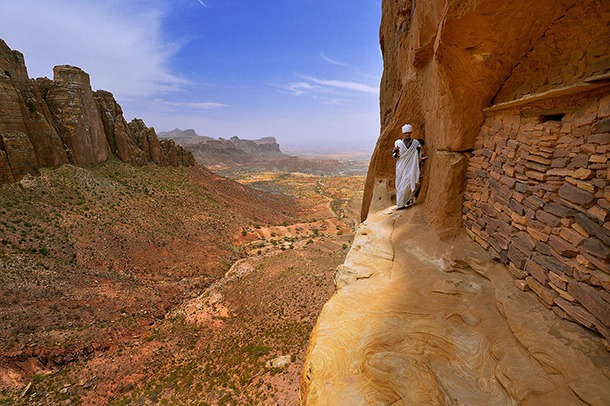
Gheralta, nestled in the northern highlands of Ethiopia’s Tigray region, is a breathtaking landscape of towering sandstone cliffs and hidden rock-hewn churches, often regarded as among the greatest treasures of Ethiopia’s historical and cultural heritage. These ancient churches, many believed to date back to the 6th century, were meticulously carved by hand into the mountainsides, leaving slender rock pillars to support their grand interiors. The most renowned of these sacred sites, such as Abune Yemata Guh and Maryam Korkor, captivate visitors with their dramatic settings, intricate frescoes, and centuries-old religious traditions. Gheralta is not only a spiritual sanctuary but also a prime destination for trekking, mountain climbing, and experiencing the rich, enduring culture of the local people.