
UNESCO World Heritage Sites and Festivals
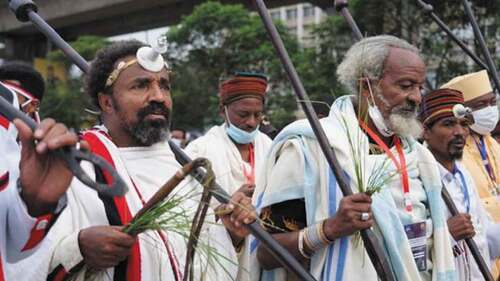
Gada system
The Gada system, inscribed in 2016 on the Representative List of the Intangible Cultural Heritage of Humanity, is a traditional governance framework developed by the Oromo people of Ethiopia, rooted in centuries of communal experience. It intricately organizes political, economic, social, and religious life, addressing conflict resolution, reparation, and the protection of women’s rights. The system is structured into five age-based classes, with leadership rotating every eight years, ensuring inclusive, cyclical authority. While membership is traditionally male and hereditary, women play a crucial consultative role, particularly in safeguarding their rights. Oral historians preserve and transmit the Gada’s rich heritage, including its laws, rituals, and cosmology, with ceremonies often held beneath the symbolic sycamore tree. The system promotes moral conduct, social cohesion, and cultural identity, with knowledge passed down through families and educational institutions, maintaining its relevance in contemporary Oromo society.
The Semien Mountains National park
The Semien Mountains National Park, a UNESCO World Heritage Site since 1979, stands as Ethiopia’s most renowned trekking and walking destination, celebrated for its dramatic landscapes of jagged peaks, deep valleys, and sheer cliffs plunging 1,500 meters. Spanning 412 square kilometers, the park is a sanctuary for rare and endemic wildlife, including the Walia ibex, gelada baboon, and the elusive Ethiopian wolf, alongside a remarkable array of plant species such as the towering giant lobelia. Ras Dejen, Ethiopia’s highest peak at 4,533 meters, crowns the rugged terrain, while the park’s diverse habitats offer exceptional opportunities for birding, with sightings of the iconic lammergeyer vulture. Whether on foot or mule back, the Simien Mountains provide a unique blend of natural beauty, adventure, and biodiversity, making it a premier ecological treasure in northern Ethiopia.

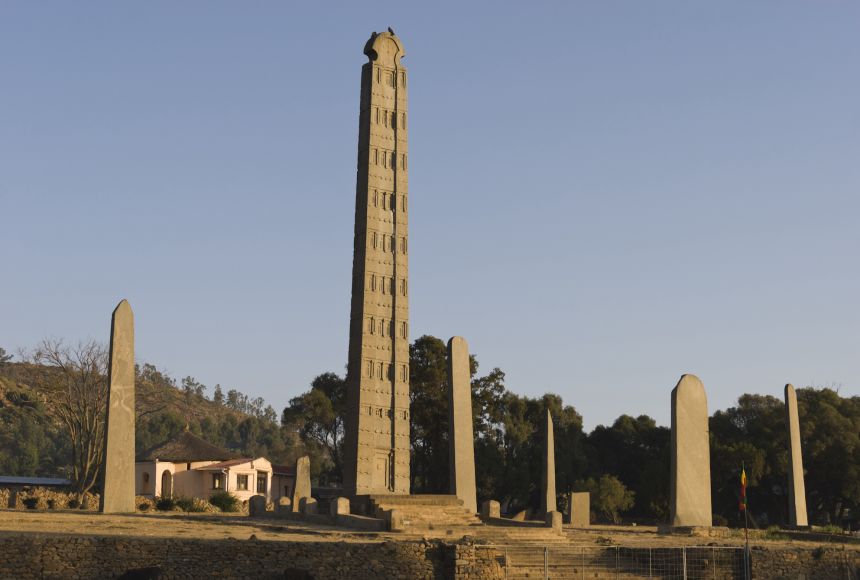
Axum
Axum, a UNESCO World Heritage site since 1980, stands as one of Ethiopia’s most sacred and historically significant cities, often compared to Jerusalem, Rome, and Constantinople for its profound legacy. Once the capital of the powerful Aksumite Kingdom, Axum was a dominant trade hub in the Horn of Africa, with influence stretching from Sudan to Yemen long before the rise of Islam. The city is renowned for its ancient obelisks, royal tombs, ruined palaces, and the monumental stelae field, which houses some of the largest megaliths ever erected. Deeply tied to Ethiopian Christianity, Axum is traditionally believed to be the resting place of the Ark of the Covenant in the Chapel of the Tablet, brought to Ethiopia by Emperor Menelik I, son of King Solomon and the Queen of Sheba. The 4th-century Cathedral of Maryam Tsion, Ethiopia’s oldest church, the archaeological museum, and numerous relics scattered throughout the city continue to preserve and reflect Axum’s rich, unparalleled heritage.
Lalibela
Lalibela, often called the “Eighth Wonder of the World,” is a remarkable 12th-century site in Ethiopia, famous for its eleven rock-hewn churches and two chapels carved directly into the earth by order of King Lalibela. These extraordinary monolithic structures, some sunk as deep as 15 meters, showcase an unparalleled architectural achievement that blends devotion, artistry, and engineering. Among them, Bete Medhane Alem stands as the world’s largest rock-hewn church, while the cross-shaped Bete Giyorgis captivates visitors with its legendary connection to Saint George. Uniquely, Lalibela remains a living religious center, where centuries-old worship practices continue undisturbed, offering a rare fusion of ancient heritage and enduring faith.

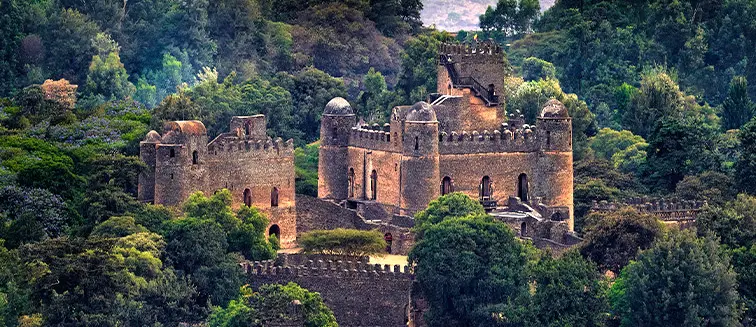
Gondar
Gondar, often referred to as the Camelot of Africa, is a historic city in northern Ethiopia renowned for its unique blend of medieval and modern character. Serving as the country’s capital from 1636 to the mid-19th century, Gondar is best known for the magnificent Fasil Ghebbi, a stone-walled royal enclosure featuring a collection of fairytale-like castles, the most notable being the three-story palace of Emperor Fasil. The city’s rich heritage is further showcased by the beautifully adorned Debre Berhan Selassie Church, famed for its ceiling of cherubic faces, and Fasil’s Pool, the vibrant heart of the annual Timkat celebration. Other significant sites include the serene Kuskuam Palace, the historic Beta Israel village of Woleka, and the ancient monastic treasures at Gorgora on the shores of Lake Tana, all contributing to Gondar’s reputation as a living museum of Ethiopian culture and history.
Meskel /Finding of the True Cross/
Meskel, celebrated annually on September 27th by the Ethiopian Orthodox Tewahedo Church, is a vibrant festival commemorating the 4th-century discovery of the True Cross by Empress Helena. Central to the celebration is the lighting of the Demera bonfire, a tradition inspired by the legend that smoke from the fire revealed the location of the buried cross. Communities across Ethiopia gather to build these towering pyres adorned with yellow Meskel daisies, symbolizing renewal after the rainy season. The eve features solemn processions of priests chanting prayers before igniting the fire, followed by joyous singing and dancing as the bonfire blazes. The festival day is marked by church services, feasting, and family reunions, reinforcing cultural identity and communal bonds throughout the country.


